.svg)
.svg)

When your furnace stops working on a cold Oregon winter night, you need a heating contractor you can trust. At Stinson Mechanical, we understand how quickly a furnace problem can turn into an emergency - and we're here to help. Serving Salem and the Willamette Valley for over 25 years, our experienced technicians can diagnose and repair virtually any furnace issue, from ignition problems to heat exchanger damage. Whether your system needs a quick fix or you're wondering if replacement makes more sense, we'll give you honest answers and get your home comfortable again.
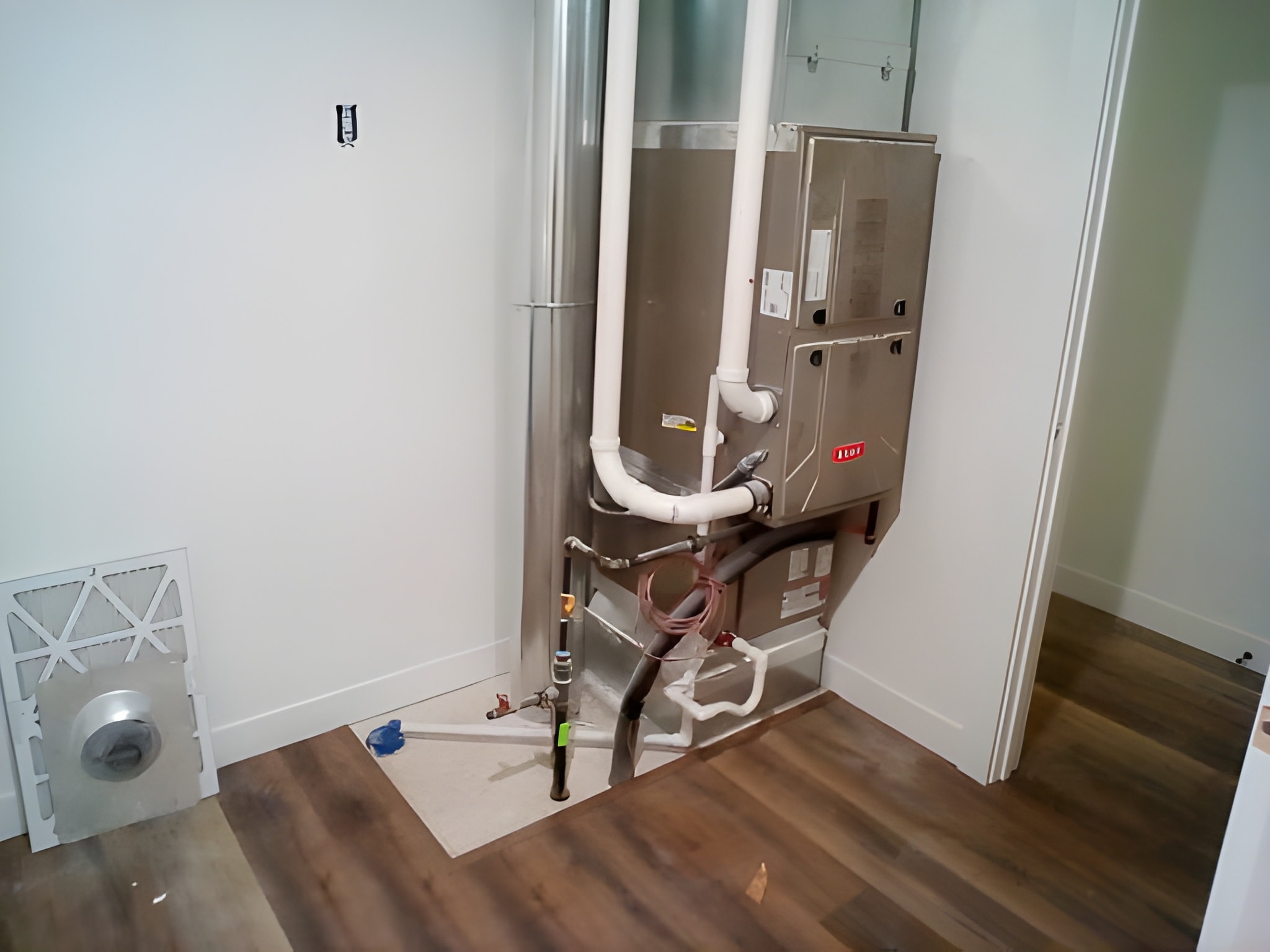
Common Furnace Problems in Salem
Salem's cold, wet winters put real demands on your heating system. We see a range of furnace issues throughout the season, and most of them can be repaired quickly when you call early.
Ignition and pilot light problems are among the most common repairs we handle. If your furnace won't ignite or keeps shutting off, the issue could be a faulty ignition sensor, a clogged pilot light, or a bad gas valve. These parts wear out over time, especially in older systems. Sometimes it's simply a matter of cleaning the sensor or replacing an inexpensive component - other times, the ignition system itself needs replacement.
Heat exchanger issues are more serious and require immediate attention. The heat exchanger transfers heat from the combustion chamber to your home's air. If it develops cracks or corrosion, it can leak carbon monoxide into your living space. We always inspect the heat exchanger during our furnace repairs and perform carbon monoxide testing to keep your family safe.
Burner problems occur when the burner assembly becomes dirty or damaged. When burners don't operate efficiently, your furnace has to work harder, consuming more energy and producing less heat. Cleaning or replacing the burner assembly restores efficiency and comfort.
Blower motor and fan issues prevent warm air from reaching your rooms. You might hear unusual noises - squealing, grinding, or rattling - coming from your furnace. These sounds often indicate bearing wear, a failing motor, or loose internal components. A blower motor replacement or bearing service usually solves the problem.
Control board and thermostat problems disrupt communication between your thermostat and furnace. If your furnace starts and stops frequently, runs constantly, or doesn't respond to your thermostat settings, the control board or thermostat calibration may be at fault. We diagnose both components to identify the real issue.
Poor airflow and blocked ducts make your furnace work inefficiently even when the unit itself is functioning properly. Dirty filters, blocked vents, or ductwork damage can reduce heat delivery throughout your home. During our repairs, we check your entire system to ensure air moves freely.
Our Furnace Repair Process
When you call Stinson Mechanical for furnace repair, we follow a thorough diagnostic approach to identify your problem accurately and explain your options clearly.
Step 1: Listen to your concerns
We start by understanding what's happening with your furnace. Are you hearing unusual noises? Is one room cold while another is warm? Is the system running constantly? Your description helps us narrow down the issue before we even arrive.
Step 2: Perform a complete inspection
Our technicians inspect your furnace system from top to bottom. We check the ignition system, test the gas valve, examine the heat exchanger, inspect the blower motor, and verify that all connections are secure. We also test your system's operation under normal conditions to see how it behaves.
Step 3: Diagnose and explain
Once we understand the problem, we explain what we found in plain language. We'll tell you what's wrong, why it happened, and what repair options exist. We stay in constant communication with our customers - that's one of our core priorities - so you'll never wonder what we're doing or why.
Step 4: Provide transparent recommendations
We'll quote you a fair repair price and let you know if we have the parts in stock for a same-day fix. If replacement might be more cost-effective than repair, we'll be honest about that too. We won't recommend an expensive repair that doesn't make sense for your situation.
Step 5: Complete the repair
Our experienced technicians perform the repair quickly and professionally. We use quality parts and stand behind our work. When we're done, your furnace will run efficiently and reliably.
Step 6: Safety testing
Before we leave, we test your furnace's operation and perform carbon monoxide testing to ensure your system is safe. We want you to feel confident that your home is secure.
Ignition System Repairs
The ignition system is your furnace's most critical component - without it, you have no heat. Modern furnaces use either hot surface ignition or intermittent pilot ignition, and both can develop problems over time.
Hot surface ignition repairs involve inspecting the ignition sensor (also called an igniter), which glows hot to light the furnace's burners. When this ceramic or silicon nitride element fails, your furnace won't light. Sometimes cleaning carbon buildup from the sensor solves the problem; other times you need a replacement igniter. We stock replacement igniters so we can often complete this repair the same day.
Pilot light issues occur in furnaces that use continuous pilot ignition. The pilot flame must be the right size and color - a healthy pilot is blue, about half an inch tall, with a small yellow tip. If the pilot won't light, goes out repeatedly, or appears weak and yellow, we check for a clogged pilot burner, a faulty thermocouple (which senses the pilot flame), or a bad gas valve. Cleaning the pilot burner or replacing the thermocouple usually restores operation.
If your furnace is repeatedly losing ignition, the problem might be electrical. Your furnace's control board might have a failing capacitor, a loose wire, or a bad transformer. We test electrical components and replace whatever isn't functioning properly.
Heat Exchanger and Burner Service
The heat exchanger and burners work together to create warmth in your home - and they need to be properly maintained to stay safe and efficient.
A cracked heat exchanger is one of the most serious furnace problems. The heat exchanger sits directly in the combustion chamber where natural gas burns. If it develops cracks or pinhole leaks, combustion gases - including carbon monoxide - can escape into your ductwork and enter your living spaces. A cracked heat exchanger cannot be safely repaired; it must be replaced. This is an expensive repair, which is one reason we recommend regular furnace maintenance. A clean, properly maintained furnace is less likely to suffer heat exchanger damage.
Burner cleaning and replacement keeps your furnace running efficiently. Over time, dust and debris accumulate on the burner assembly, reducing efficiency and heat output. A clean burner produces a bright blue flame and heats your home with less fuel consumption. If the burner assembly itself is damaged - bent, cracked, or heavily corroded - replacement is necessary. We perform burner cleaning during routine maintenance and replace damaged assemblies when needed.
Blower Motor and Airflow Troubleshooting
Your furnace's blower motor is the fan that pushes warm air through your ductwork and into your rooms. Without it, your furnace produces heat but your home stays cold.
Blower motor failures typically announce themselves with unusual noises - squealing means bearing wear, grinding indicates a mechanical problem, and rattling suggests loose components. Sometimes the motor simply stops working, and you'll notice no air movement at all when the furnace is running.
We diagnose blower problems by testing motor operation, listening for mechanical noise, and inspecting for bearing wear and loose fasteners. A worn bearing can sometimes be serviced, but a failing motor needs replacement. We stock blower motors for common furnace models, so we can often complete this repair quickly.
Airflow problems can also stem from your furnace filter. A seriously clogged filter forces your blower to work harder, reducing airflow and efficiency. We check your filter during every service call and recommend monthly filter changes during heating season. Using the correct filter size and MERV rating matters - we can advise you on the best filter for your home.
Ductwork issues sometimes limit airflow even when your furnace is working perfectly. Leaky ducts, crushed sections, or blocked vents can prevent warm air from reaching certain rooms. If we identify ductwork problems during your repair, we'll discuss options to improve your home's comfort and efficiency.
Control Board and Thermostat Diagnostics
Your furnace's control board is its brain - it receives signals from your thermostat and tells the furnace when to start, how to operate, and when to stop.
Control board problems might cause your furnace to short-cycle (start and stop repeatedly), run continuously without responding to your thermostat, or fail to start at all. We test the control board using specialized equipment to identify failed components. Sometimes a capacitor has failed, a relay is stuck, or a transformer is burned out. We can often replace individual components, though sometimes the entire board needs replacement.
Thermostat issues are frequently the source of apparent furnace problems. If your home temperature won't stabilize, the furnace seems to run randomly, or your thermostat doesn't respond to adjustments, we check thermostat calibration and wiring. A thermostat that's out of calibration by just a few degrees can cause your furnace to behave strangely. We test and recalibrate your thermostat as needed, and we'll replace it if it's damaged or failing.
Carbon Monoxide Safety and Testing
Carbon monoxide is colorless and odorless - you can't detect it without testing equipment. But it's produced whenever natural gas burns, which means your furnace is a potential source of carbon monoxide in your home.
Carbon monoxide dangers are serious. Exposure causes headaches, nausea, dizziness, and confusion - symptoms that feel like flu. High concentrations can cause loss of consciousness and death. That's why we test for carbon monoxide during every furnace repair and maintenance visit.
Our CO testing process uses calibrated, professional-grade equipment to measure carbon monoxide levels in your home. We test the air being pulled into your return ductwork and the air being delivered by your furnace. We also inspect your furnace for cracks or damage that might allow combustion gases to escape into your living space. If we detect elevated carbon monoxide levels, we stop operation of your furnace immediately and address the source of the problem.
Prevention through maintenance is your best defense against carbon monoxide issues. A furnace that's clean, properly adjusted, and operating efficiently produces minimal carbon monoxide. Regular furnace maintenance catches problems before they become dangerous. We recommend having your furnace serviced twice yearly - once in the fall before heating season and once in the spring. This keeps your system safe, efficient, and reliable.
Emergency Furnace Repair in Salem
Winter in the Willamette Valley can be unpredictable - ice storms, freezing rain, and sudden cold snaps happen quickly. When your furnace fails on a cold night, you need immediate help.
Stinson Mechanical offers emergency furnace repair service. While our regular hours are 9 AM to 5 PM Monday through Friday, we understand that furnace emergencies don't wait for business hours. We prioritize emergency calls and work hard to get your system restored as quickly as possible.
When you call with a furnace emergency, describe your situation - is the furnace completely non-functional, or is it running but not producing heat? Is there an unusual smell or sound? Does your home have backup heating? These details help us prioritize and prepare for your service call.
Most furnace repairs can be completed in 1-2 hours once our technician arrives. We stock common replacement parts like ignition sensors, thermocouples, and blower motors, which means we can often fix your furnace without ordering parts and waiting for delivery. Having parts in stock is one way we keep our customers comfortable during emergencies.
Typical Furnace Repair Costs and Parts Availability
Furnace repair costs vary widely depending on what's wrong with your system and whether parts need to be replaced.
Simple repairs like cleaning a pilot light or replacing a filter cost less than $200. These are usually quick fixes that restore your furnace to full operation.
Component replacements - like an ignition sensor, thermocouple, blower motor bearing kit, or simple control board repair - typically range from $200 to $600. These are the most common repairs we perform, and we often have parts in stock.
Major component replacements - like a blower motor, gas valve, or heat exchanger - can range from $600 to $1,500 or more depending on your furnace model. These repairs cost more but restore your system to full function and often extend its life by several years.
We always provide a transparent quote before we start work, so you know exactly what you're paying for. If repair costs are approaching or exceeding the price of a new furnace, we'll discuss replacement options with you honestly.
Parts availability matters when you need your furnace fixed quickly. Stinson Mechanical stocks common furnace parts - ignition sensors, thermocouples, control boards, blower motors, and gas valves - so we can complete many repairs the same day you call. For specialty parts or less common furnace models, we work with reliable suppliers to get what you need as quickly as possible.
Repair Versus Replacement - Making the Right Decision
One of the most important decisions you'll face is whether to repair your furnace or replace it. We help you make this decision by being honest about your options and your furnace's condition.
Repair makes sense when:
- Your furnace is less than 15 years old and the repair cost is under $500
- The repair addresses the immediate problem without other major issues looming
- Your furnace has been well-maintained and operates efficiently
- You're not facing multiple repairs within a short timeframe
- The repair will reliably restore your comfort for years to come
Replacement makes sense when:
- Your furnace is over 20 years old and has frequent repair needs
- The repair costs more than half the price of a new system
- Your system is inefficient and costing you hundreds in extra energy bills annually
- The heat exchanger is cracked or needs replacement (a major expense)
- You're facing the prospect of multiple expensive repairs in the coming years
- Your furnace doesn't meet current energy code requirements
We provide honest guidance on this decision. Sometimes a repair is the smart choice; sometimes replacement saves you money in the long run. We'll explain the numbers and let you decide what makes sense for your home and budget.
New furnaces are significantly more efficient than older models. A modern furnace can save you 20-30% on heating costs compared to a furnace that's 10-15 years old. Over several years, these energy savings add up and can offset the cost of replacement. We offer flexible financing to help with the upfront investment in a new system.
Energy Efficiency and Your Furnace
Salem's winters demand reliable heating, but you also want to keep energy costs under control. The efficiency of your furnace directly impacts your heating bills.
Furnace efficiency ratings are measured by AFUE (Annual Fuel Utilization Efficiency). An older furnace might have an AFUE of 70-80%, meaning 20-30% of the fuel you burn is wasted up the chimney. A modern high-efficiency furnace has an AFUE of 95% or higher, capturing nearly all the energy from the fuel it burns.
Proper maintenance improves efficiency. A furnace with a clogged filter, dirty burners, or improperly calibrated controls doesn't run at peak efficiency. Regular maintenance - which includes cleaning, testing, and adjustment - keeps your furnace operating at its rated efficiency level. This is one reason we recommend twice-yearly furnace service.
Ductwork efficiency matters too. Leaky ducts lose heat before warm air reaches your rooms. If we identify ductwork problems during your furnace repair, we can discuss sealing or improving your ducts to reduce energy loss.
During our repair service, we assess your furnace's overall efficiency and operation. If your system is running poorly and consuming excess energy, we'll discuss what might improve efficiency - whether that's maintenance, repairs, or replacement.
When to Call Stinson Mechanical for Furnace Repair
Don't wait until your furnace completely fails to call for service. Watch for these warning signs that indicate your furnace needs professional attention:
- Unusual noises - squealing, grinding, rattling, or rumbling sounds from your furnace
- Weak or uneven heating - some rooms stay cold while others are warm, or your whole house never reaches your thermostat setting
- Frequent cycling - your furnace starts and stops repeatedly instead of running smoothly
- Yellow or sooty flame - if you can see into your furnace, the flame should be blue; yellow indicates an efficiency problem
- Rising energy bills - a sudden increase in your heating costs suggests your furnace is working inefficiently
- Odors - a musty, dusty, or burning smell coming from your furnace or vents indicates a problem
- Age and history - if your furnace is over 15 years old and has needed multiple repairs, replacement might be in your future
Early service calls prevent small problems from becoming emergencies. A furnace that's making noise or running inefficiently can usually be repaired quickly and affordably if you call promptly. Waiting until it stops working entirely often means emergency service and more costly repairs.
Why Choose Stinson Mechanical for Your Furnace Repair
For over 25 years, Stinson Mechanical has been the trusted HVAC choice for homeowners and businesses throughout Salem and the Willamette Valley. We're not a big corporate company - we're local technicians who care about keeping your family comfortable and your system reliable.
Our commitment to honesty means you'll get straightforward answers about your furnace's condition. We'll tell you if a repair makes sense or if replacement is the smarter investment. We won't pressure you into expensive repairs that aren't necessary.
Our experienced technicians, including Justin Stinson and Colin Wiltsey, bring years of hands-on HVAC expertise to every job. We've diagnosed and repaired virtually every furnace problem you might encounter.
We stock parts for quick repairs, which means your furnace often gets fixed the same day you call. We stay in constant communication with you throughout the repair process, so you always know what's happening and why.
We provide upfront pricing without surprises, flexible financing options for larger repairs or replacement, and a commitment to getting your home comfortable again as quickly as possible.
When your furnace stops working, Stinson Mechanical is here for you. We'll diagnose your problem honestly, explain your options clearly, and provide reliable repair service that you can count on.