.svg)
.svg)

Indoor air quality directly impacts your health, comfort, and the efficiency of your HVAC system. Whether you're experiencing stuffy rooms, strange odors, allergies, or simply want to understand what you're breathing, professional air quality testing provides the answers you need. At Stinson Mechanical, we've been helping Monmouth, OR residents and businesses identify and address air quality issues since 2018. Our team understands that honest assessment and clear communication are essential when evaluating your home or building's indoor environment. With over 25 years of combined HVAC experience, we bring expertise and integrity to every air quality testing project we undertake.
Why Air Quality Testing Matters
Most people spend the majority of their time indoors, yet indoor air can be significantly more polluted than outdoor air. Common contaminants like dust, mold spores, volatile organic compounds (VOCs), carbon dioxide (CO2), and excess humidity accumulate in homes and commercial spaces, often without anyone realizing the problem exists. Poor air quality can trigger allergies, asthma, headaches, fatigue, and other health issues. It can also force your HVAC system to work harder, driving up energy bills and shortening equipment life.
Testing removes the guesswork. Instead of making assumptions about what might be affecting your comfort and health, you get actual data about what's in your air. This information empowers you to make informed decisions about ventilation, filtration, and other corrections. For Monmouth, OR property owners facing the Pacific Northwest's humidity and seasonal air quality challenges, professional testing is a smart investment in peace of mind.
Types of Air Quality Testing We Offer
Air quality encompasses multiple factors, and comprehensive testing addresses each one:
- Particulate Matter Testing: Measures dust, pollen, pet dander, and other solid particles suspended in your air. This is especially important for allergy sufferers and anyone with respiratory sensitivities.
- Volatile Organic Compound (VOC) Testing: Detects chemical vapors from paints, cleaners, furniture, flooring, and other sources. VOCs can cause headaches, dizziness, and respiratory irritation, particularly in new constructions or recently renovated spaces.
- Carbon Dioxide (CO2) Monitoring: Tracks CO2 levels, which indicate whether your space has adequate ventilation. High CO2 often means stale air and poor fresh air exchange, leading to stuffiness and reduced mental clarity.
- Humidity Level Assessment: Measures moisture content in your air. The Pacific Northwest's damp climate makes humidity control critical - too much promotes mold growth, dust mites, and mildew; too little causes dry skin and respiratory discomfort.
- Mold Spore Sampling: Identifies airborne mold spores and helps pinpoint sources. Given Monmouth's wet climate, mold concerns are common, and sampling determines whether you have a problem and how severe it is.
Each test type uses specialized equipment and methods to capture accurate data about your specific air quality challenges.
Our Testing Methodology and Equipment
At Stinson Mechanical, we use professional-grade equipment designed for accuracy and reliability. Our testing approach follows industry standards and delivers trustworthy results you can count on.
For particulate testing, we deploy air sampling devices that measure particle concentrations over a set period. These devices capture real-world data about what you're actually breathing, not estimates or assumptions.
VOC testing uses specialized detection equipment that identifies chemical compounds in your air. We sample from different areas of your property to build a complete picture of chemical contamination sources and distribution.
CO2 monitoring employs calibrated meters that measure carbon dioxide levels throughout your space. This helps us assess ventilation effectiveness and determine whether your HVAC system is bringing in enough fresh outdoor air.
Humidity assessment uses reliable hygrometers that measure moisture levels in real time. For Monmouth, OR homes dealing with the region's natural dampness, this data helps us recommend appropriate dehumidification or ventilation adjustments.
Mold spore sampling involves collecting air samples using specialized collection media. These samples are sent to a certified laboratory for analysis, identifying mold species and concentration levels. We also visually inspect for visible mold growth and moisture sources that might indicate problems.
The equipment we use is regularly calibrated and maintained to ensure accuracy. More importantly, our technicians know how to position sampling devices correctly, conduct tests during representative conditions, and interpret results in the context of your specific property and concerns.
How Results Are Reported and Interpreted
Testing means nothing if you can't understand what the numbers actually mean. We believe in honest, clear communication - one of our core priorities. After completing your air quality testing, we provide a detailed report that explains:
- What was tested: A breakdown of each test we performed and why.
- The findings: Your actual test results presented clearly, with explanations of what each measurement indicates.
- How results compare to standards: Industry benchmarks and EPA guidelines that show whether your levels are acceptable, elevated, or concerning.
- What's causing the issues: Our professional assessment of the source or sources contributing to any problems we identified.
- Health implications: Honest information about what the results mean for you, your family, or your employees.
We explain technical terms in plain language. Our goal is for you to fully understand your air quality situation and why certain recommendations make sense. We don't use jargon as a barrier - we use it as a tool only when necessary, and we always clarify.
Recommended Corrective Actions
Based on your test results, we discuss practical solutions tailored to your specific situation. Corrective actions depend entirely on what we find:
If particulate contamination is the issue, we might recommend upgrading your air filter to a higher MERV rating, installing a media filter or electronic air cleaner, or improving ventilation to reduce indoor particle accumulation.
For VOC problems, solutions often include improving ventilation by bringing in more fresh outdoor air, using low-VOC products in future renovations or cleanings, source removal or isolation, and in some cases, activated carbon filtration.
High CO2 levels usually indicate inadequate ventilation. We discuss increasing outdoor air intake, ensuring your HVAC system's fresh air damper is functioning properly, or installing a dedicated ventilation system like an Energy Recovery Ventilator (ERV) - particularly valuable in Pacific Northwest homes where you want fresh air without losing heating or cooling.
Humidity imbalances might require a whole-home dehumidifier if moisture is too high, a humidifier if it's too low, or ventilation improvements to naturally manage moisture. In Monmouth, OR, where dampness is common, we often recommend ensuring proper drainage around your foundation, fixing any water intrusion issues, and using ventilation to manage humidity naturally.
Mold concerns require identifying and eliminating the moisture source first. This might involve fixing leaks, improving drainage, installing proper ventilation in bathrooms and kitchens, or using a dehumidifier. Once moisture is controlled, any existing mold can be properly addressed.
Stinson Mechanical can implement many of these solutions directly. If a recommendation falls outside HVAC services, we'll refer you to trusted local professionals.
Follow-Up Verification Testing
Corrective actions only make sense if they actually work. We recommend follow-up testing after implementing solutions to verify that your air quality has genuinely improved. This might occur weeks or months after initial corrections, depending on what was done.
Verification testing gives you proof that the problem is solved and that you're now breathing healthier air. It also helps us fine-tune any recommendations - if one approach didn't achieve the desired results, we can adjust and try a different strategy.
For ongoing monitoring of certain parameters like humidity or CO2, we can discuss continuous monitoring solutions that track levels over time and alert you to problems before they become serious.
Testing Turnaround Times
We understand that when you're concerned about air quality, you want answers quickly. Here's what to expect:
Initial testing visits typically take 1-3 hours depending on the scope. We'll visit your property, conduct all requested tests, discuss preliminary observations, and explain next steps.
For tests that require laboratory analysis (like mold spore sampling), turnaround is typically 5-10 business days from when samples are shipped. We'll keep you informed about when to expect results.
Reports are provided in writing, and we're available to discuss findings and answer questions. We stay in constant communication with our customers until the job is done, which applies to testing projects just as much as repair and installation work.
If you need faster results for critical concerns, ask about expedited analysis options when you schedule your testing.
Air Quality Testing for Residential Properties
Homeowners often want testing because of health concerns, allergy issues, musty smells, or concerns about new construction off-gassing. Residential testing helps you understand whether your home's environment supports your family's health and comfort.
Common scenarios include testing after water damage (to verify mold isn't a hidden problem), in homes with multiple family members experiencing unexplained allergies or respiratory issues, in newly constructed or recently renovated homes (to check for VOCs), and in older homes where you're uncertain about past water or mold exposure.
We test single rooms or whole homes depending on your concerns. We also assess how well your HVAC system is serving your needs and make recommendations for improvement. Your home should be your family's healthiest space - testing helps ensure it truly is.
Air Quality Testing for Commercial Properties
Commercial buildings house employees, customers, or tenants whose health and productivity depend on indoor air quality. Poor air quality increases sick days, reduces worker focus, and can expose property owners to liability if occupants develop health issues.
Commercial testing is valuable in office buildings, retail spaces, schools, medical offices, warehouses, and any other commercial environment. If occupants have complained about stuffiness, odors, or health symptoms, testing identifies the root cause. If you're purchasing a commercial property, pre-purchase testing can reveal hidden air quality issues before you take ownership.
We understand commercial building codes and standards, and we can test to verify compliance with applicable requirements. For businesses in Monmouth, OR, we provide testing that meets your specific operational needs and building standards.
Addressing Monmouth, OR Climate Challenges
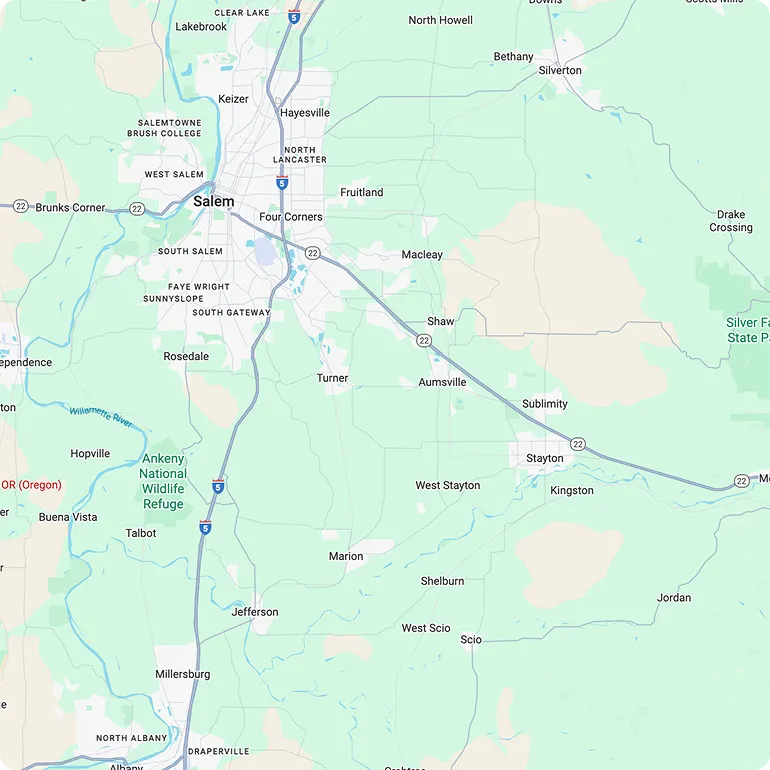
Monmouth's location in the Willamette Valley creates specific air quality challenges worth understanding. The region's high humidity, rainfall, and seasonal weather patterns influence indoor air quality significantly.
Moisture is the biggest challenge for most Monmouth properties. Our wet climate makes homes and buildings naturally prone to humidity accumulation, mold growth, and musty odors. Testing helps you understand your property's moisture situation and implement effective dehumidification or ventilation strategies.
Seasonal variations also matter. Winter's constant dampness and limited fresh air (since windows stay closed) can raise CO2 and humidity. Spring and fall transitions can bring higher pollen counts if ventilation isn't filtering properly. Summer's occasional warm, humid periods can spike indoor humidity if not managed.
Professional testing in a Monmouth, OR property takes these regional factors into account. We understand what's normal for our area and what indicates a genuine problem requiring intervention.
Next Steps After Testing
Once testing is complete and recommendations are discussed, you control what happens next. Some customers implement all recommendations immediately. Others prioritize the most critical improvements first, then address others over time.
If your testing reveals that your HVAC system needs upgrades - better filtration, ventilation improvements, humidity control, or other modifications - we can discuss options and provide free quotes for any work. Our flexible financing through Synchrony makes improvements affordable for most budgets.
Even if your testing results are excellent and no immediate action is needed, we recommend periodic retesting - perhaps annually or whenever you notice new concerns. Air quality can change over time as HVAC equipment ages, household products accumulate, or new sources emerge.
We're here to support your indoor air quality journey, from initial testing through implementation of solutions and ongoing verification. Stinson Mechanical brings the same commitment to honest service, clear communication, and genuine customer comfort to air quality testing as we do to every other HVAC service we provide in Monmouth, OR and throughout the Willamette Valley.