.svg)
.svg)

A programmable thermostat is one of the most effective ways to reduce your energy bills while keeping your home or business comfortable year-round. If you're looking to optimize your HVAC system's efficiency in Detroit, OR, understanding how programmable thermostats work and how to set them up properly can make a significant difference in both comfort and cost savings. Stinson Mechanical specializes in helping homeowners and business owners in the Willamette Valley maximize their heating and cooling efficiency through expert thermostat installation, programming, and support.
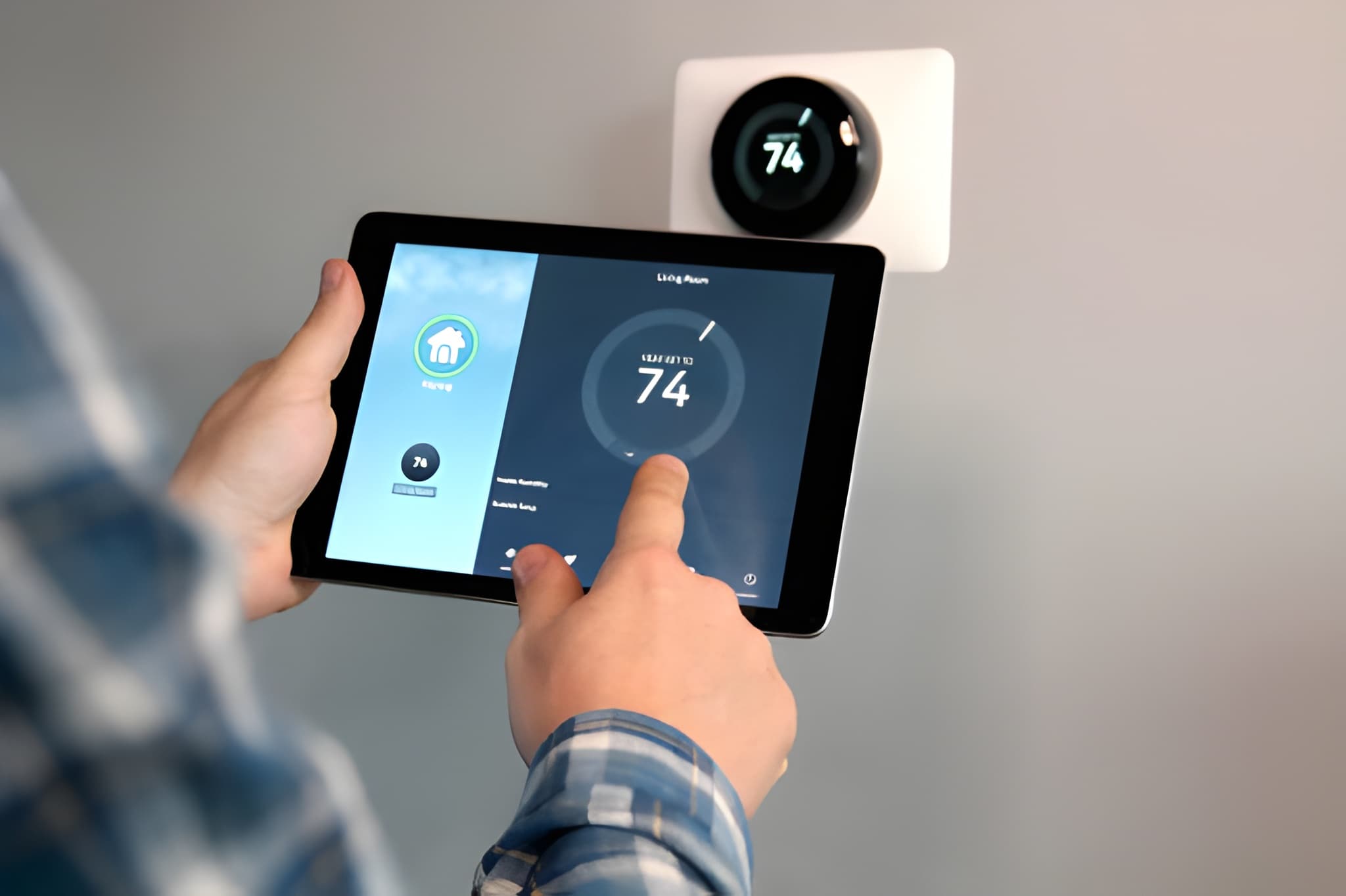
The thermostat is essentially the brain of your HVAC system. Rather than manually adjusting your system throughout the day, a programmable thermostat allows you to set automatic temperature schedules based on your daily routine, seasonal changes, and occupancy patterns. This automation means your system only works as hard as it needs to - saving energy during times when you're away or sleeping, and ensuring comfort when you're home.
Why Programmable Thermostats Matter for Detroit, OR Homeowners and Businesses
Detroit, OR, and the surrounding Willamette Valley experience significant seasonal temperature swings. Winters can be cold and wet, while summers can be warm and dry. A programmable thermostat helps you adapt your heating and cooling schedules to these changing conditions without constant manual adjustment.
Many homeowners and business owners in our service area struggle with high energy bills, especially when they rely on manual temperature adjustments throughout the day. A programmable thermostat eliminates this guesswork. Instead of heating or cooling an empty house all day, or forgetting to adjust the temperature before bed, your system runs on a schedule that matches your lifestyle. The result is often a 10-15% reduction in heating and cooling costs - savings that add up significantly over months and years.
Beyond cost savings, programmable thermostats address another common pain point: inconsistent temperatures. If you've noticed that some rooms feel too warm while others are too cold, or if your system seems to cycle on and off too frequently, the issue often traces back to thermostat settings. A properly programmed thermostat can help balance comfort throughout your home or business while reducing strain on your HVAC equipment.
Understanding Programmable Thermostat Features
Modern programmable thermostats offer flexibility that older manual systems simply cannot match. Here's what you need to know about the key features:
Daily Scheduling
A daily schedule divides your day into periods - typically morning, afternoon, evening, and night. For each period, you set a target temperature. For example:
- Morning (6:00 AM - 8:00 AM): 68 degrees to warm up your home before you wake
- Daytime (8:00 AM - 5:00 PM): 62 degrees while you're at work
- Evening (5:00 PM - 10:00 PM): 70 degrees when you're home and active
- Night (10:00 PM - 6:00 AM): 65 degrees while you're sleeping
This approach keeps you comfortable during active hours while reducing energy use when you're away or sleeping. The key is setting temperatures that match your actual routine and tolerance level.
Weekly Programming
Because your schedule likely changes between weekdays and weekends, most programmable thermostats let you create different programs for different days of the week. You might run a tighter schedule during weekdays when everyone is out of the house, then adjust for a weekend when family members are home throughout the day. Some units allow you to group days together (such as Monday through Friday for one program and Saturday-Sunday for another), which simplifies setup.
Seasonal Adjustments
Detroit, OR, winters demand adequate heating to keep your home safe and comfortable, while summers require efficient cooling. A programmable thermostat lets you completely change your schedule between seasons. In winter, you might warm your home to 68 degrees during the day, while in summer that same thermostat might cool to 74 degrees to reduce AC costs. Stinson Mechanical recommends adjusting your thermostat schedule when daylight saving time changes to align with seasonal shifts in your heating and cooling needs.
Hold or Override Function
Life happens unpredictably. If guests arrive unexpectedly or you stay home sick, most programmable thermostats include a temporary hold function that maintains your current temperature setting without disrupting your programmed schedule. Once you release the hold, your system returns to its regular programming.
How to Program Your Thermostat: Step-by-Step
Setting up a programmable thermostat correctly ensures you capture maximum energy savings while staying comfortable. Here's how to approach programming:
Step 1: Map Your Weekly Routine
Start by documenting when people are actually home and away during a typical week. Note your sleep schedule, work hours, and any regular activities that take you out of the house. This realistic picture of your occupancy is the foundation for effective programming.
Step 2: Determine Your Temperature Preferences
Different people have different comfort zones. Some homeowners feel comfortable dropping the temperature to 62 degrees during the day, while others prefer 66 degrees. The key is finding the lowest temperature (in winter) or highest temperature (in summer) that you find acceptable when away, because even a 2-3 degree change can reduce energy use by 5-10%.
Step 3: Access Your Thermostat's Menu
Most programmable thermostats have a menu system accessed through buttons on the face of the unit or a digital screen. Look for buttons labeled "Program," "Set," or "Menu." Your thermostat's manual will walk you through the specific button sequence, but the general process involves selecting the day or day grouping, then entering times and temperatures.
Step 4: Enter Your First Program Period
Start with one program period - for example, your weekday morning. Set the start time (such as 6:00 AM) and your desired temperature. Confirm the entry on your screen.
Step 5: Continue Adding Periods
Work through each time period for that day, entering start times and temperatures. Most thermostats let you create 4-6 periods per day, though some advanced models allow more flexibility. Take your time and refer to your routine map from Step 1.
Step 6: Repeat for Each Day or Day Group
If your schedule varies significantly between weekdays and weekends, program weekdays first (Monday-Friday), then set up your weekend program (Saturday-Sunday). Some thermostats allow you to copy a program from one day to another, which saves time if your schedule repeats.
Step 7: Review and Test
Once programming is complete, scroll through your settings to verify times and temperatures are correct. Some thermostats show a summary view that makes it easy to spot mistakes. Don't be discouraged if you need to make adjustments - it's common to tweak your program after a week or two of living with your new settings.
Step 8: Activate Your Program
Make sure your thermostat is set to "Auto" or "Program" mode, not "Hold." This ensures your system actually follows your schedule. If your unit is set to "Hold," it will maintain the current temperature but won't follow your programmed changes.
Customizing Settings for Different Spaces and Needs
Not every home or business in Detroit, OR, has the same heating and cooling needs. Stinson Mechanical works with customers to customize thermostat settings based on their specific situations.
For Homes with Multiple Zones
If your home has a zoning system - meaning you can independently control heating and cooling in different areas - you may have multiple thermostats. Each zone should be programmed according to how that area is actually used. For example, if your master bedroom is rarely occupied during the day, you might allow that zone to drift to 60 degrees while keeping your main living areas at 66 degrees.
For Businesses
Commercial spaces in the Willamette Valley often have different occupancy patterns than residential homes. A retail business might need cooling from 8 AM to 6 PM, Monday through Saturday, but minimal heating in the evening. An office building might run a weekday schedule completely different from its weekend schedule. Stinson Mechanical can help program your business thermostat to match your actual operating hours and occupancy.
For Homes with Variable Occupancy
Some homeowners travel frequently or have irregular schedules. If you're away for an extended period, you can adjust your thermostat to a wider temperature range (for example, allowing your home to cool to 60 degrees in winter or warm to 80 degrees in summer) to reduce energy use while preventing damage to your home. Stinson Mechanical recommends never letting your home drop below 55 degrees in winter, as this risks frozen pipes.
For Seasonal Transitions
The Willamette Valley's spring and fall can be unpredictable, with warm days and cold nights. Many homeowners find it helpful to create a "spring" and "fall" program in addition to their main heating and cooling schedules. This allows you to respond quickly when weather patterns shift without waiting until you formally change your seasonal settings.
Common Programming Problems and Solutions
Even with clear instructions, homeowners sometimes encounter issues when programming their thermostats. Here are the most common problems and how to address them:
Problem: The Thermostat Isn't Following Your Program
If your system doesn't seem to be responding to your programmed schedule, first check that your thermostat is in "Program" or "Auto" mode, not "Hold." Many thermostats default to "Hold" after a power outage, which overrides all programming. If the mode is correct, verify that your times and temperatures were actually saved. Some thermostats require you to confirm entries by pressing a specific button.
Problem: Your Program Keeps Getting Erased
Power outages are common in the Willamette Valley during winter storms. Most programmable thermostats have a backup battery that keeps your program intact during brief outages, but if the power is out for an extended period, your settings may revert to factory defaults. If this happens repeatedly, consider upgrading to a thermostat with a larger backup battery or a WiFi-connected smart thermostat that stores settings in the cloud.
Problem: You Programmed Everything but Your Bills Haven't Changed
If you've created a detailed schedule but haven't seen energy savings, the issue might be that your programmed temperatures are still too close to the temperature you were manually maintaining. Remember that even a 3-degree setback in winter or 3-degree increase in summer can reduce energy use significantly. If you're uncomfortable reducing your temperatures further, your HVAC system itself might need attention - a system that's not running efficiently won't deliver the savings you expect.
Problem: Some Rooms Feel Too Hot or Too Cold Despite Programming
If your home has inconsistent temperatures, the issue often relates to airflow or zoning rather than thermostat programming. Blocked air vents, closed doors, or an imbalanced system can prevent proper temperature distribution. Stinson Mechanical can assess your system to determine if programming adjustments alone will solve the problem or if you need professional airflow balancing.
Problem: Your Thermostat Display Seems Stuck or Unresponsive
If your thermostat isn't responding to button presses or seems frozen, try replacing the batteries. Most programmable thermostats use AA or AAA batteries, and low battery power can cause sluggish responses or display errors. If new batteries don't solve the problem, your thermostat may need professional service or replacement.
When to Upgrade to a Smart Thermostat
While programmable thermostats offer excellent energy savings, smart thermostats take efficiency to the next level. Smart thermostats connect to your home WiFi, allowing you to adjust settings from your phone, receive energy reports, and use advanced features like geofencing that automatically adjusts temperatures when you leave or arrive home.
If you're considering a smart thermostat upgrade in Detroit, OR, here are some factors to consider:
You might benefit from upgrading if you have an unpredictable schedule that doesn't fit neat daily time blocks. Smart thermostats can learn your patterns and adjust automatically without you manually entering complex programming. Frequent travelers often find that the geofencing feature - which cools or heats your home only when you're nearby - provides significant additional savings.
If your current programmable thermostat is more than 10-15 years old, upgrading makes sense. Newer thermostats are more accurate, more user-friendly, and often more energy-efficient. Stinson Mechanical can assess your current system and recommend whether a smart thermostat upgrade is worth the investment for your specific situation.
If you have a smart home system or other connected devices, a smart thermostat integrates seamlessly and allows you to control your HVAC system alongside your other home automation. If you're planning other smart home upgrades, adding a smart thermostat at the same time can simplify installation and setup.
If you're interested in detailed energy data, smart thermostats provide reports showing exactly when and how much energy your system uses. This level of insight can help you fine-tune your programming even further and identify unusual patterns that might indicate a system problem.
Stinson Mechanical can guide you through the decision of whether a smart thermostat upgrade makes sense for your needs and budget. We have extensive experience with both traditional programmable thermostats and the latest smart thermostat technology, and we understand which solution works best for different homes and businesses in the Willamette Valley.
Integrating Your Programmable Thermostat with Your Existing HVAC System
One common concern for homeowners considering a programmable thermostat is whether it will work with their existing furnace, heat pump, or air conditioning system. The good news is that most programmable thermostats are compatible with virtually any standard residential or commercial HVAC system.
Stinson Mechanical handles the installation and integration process to ensure your thermostat works seamlessly with your current equipment. During installation, we verify that your system's wiring matches your thermostat's specifications and that all connections are secure. We also test the system to confirm that heating and cooling stages activate correctly in response to your programmed settings.
If your home has a heat pump - increasingly common in the Willamette Valley for year-round comfort and efficiency - your thermostat needs to be heat pump compatible. Some older programmable thermostats don't properly control heat pump systems, particularly the auxiliary heating stage that kicks in during extreme cold. Stinson Mechanical ensures your thermostat is appropriate for your specific HVAC equipment.
For homes or businesses with zoning systems that independently control multiple areas, your programmable thermostat might be paired with zone control dampers. Stinson Mechanical can help you understand how your zoning system works and program your thermostat to coordinate with your zones for maximum efficiency.
Energy Efficiency Benefits Beyond Basic Programming
Programming your thermostat is an excellent first step toward energy efficiency, but maximum savings often come from combining thermostat programming with other strategies. Stinson Mechanical recommends pairing your programmable thermostat with regular HVAC maintenance to ensure your system runs efficiently.
A furnace, air conditioner, or heat pump that hasn't been serviced in years has to work harder to maintain the temperatures your thermostat requests. Even a small accumulation of dust on your indoor coil or outdoor unit can reduce efficiency by 5-10%. When you maintain your system through twice-yearly tune-ups - spring before summer cooling and fall before winter heating - your thermostat's programming delivers maximum energy savings.
Weatherization also amplifies thermostat benefits. If your home is poorly insulated or has air leaks around windows and doors, your system has to run constantly to maintain your programmed temperatures. Adding insulation, sealing air leaks, and upgrading to energy-efficient windows all work together with your programmable thermostat to reduce costs.
For businesses in the Willamette Valley, Stinson Mechanical can perform an energy efficiency assessment that evaluates your HVAC system, building envelope, and current thermostat settings. This assessment often identifies opportunities for additional savings beyond simple thermostat programming.
Seasonal Maintenance and Thermostat Performance
Just as Stinson Mechanical recommends twice-yearly HVAC maintenance for homeowners and business owners in Detroit, OR, seasonal adjustments to your thermostat programming support year-round efficiency. When you transition from heating to cooling season or vice versa, take a few minutes to review and update your thermostat program.
In spring, as outdoor temperatures warm, increase your thermostat's cooling setpoint and prepare your air conditioning system for the warmer months ahead. In fall, as temperatures cool, lower your heating setpoint and ensure your furnace or heat pump is ready for winter. Making these adjustments deliberately, rather than letting them happen reactively, helps you capture maximum efficiency from day one of each season.
Detroit, OR's climate means that spring and fall can bring unexpected temperature swings. Some years, April feels warm, while other years frost appears late in the month. Your programmable thermostat's flexibility allows you to adjust quickly when weather surprises you, rather than overheating or overcooling your home.
Making the Programmable Thermostat Decision for Your Detroit, OR Property
Whether you're upgrading from a manual thermostat, replacing an older programmable model, or installing a new system in a recently constructed home or business, Stinson Mechanical is here to help you understand the options and make the best choice for your situation.
A programmable thermostat is one of the most cost-effective investments you can make in your HVAC system. The upfront cost is modest - far less than a new furnace or air conditioning unit - but the energy savings accumulate month after month and year after year. For most Detroit, OR, homeowners and businesses, a programmable thermostat pays for itself through energy savings within the first 1-2 years of use.
Beyond the financial benefits, programmable thermostats provide peace of mind. You're no longer reliant on remembering to adjust your thermostat before bed or before leaving for work. Your system automatically adapts to your routine, and you can make temporary adjustments without disrupting your long-term program.
Stinson Mechanical has over 25 years of HVAC experience serving the Willamette Valley. We understand the heating and cooling challenges specific to Detroit, OR, and we can recommend thermostat solutions tailored to your home or business. Our commitment to honesty and customer comfort means we'll help you find the right thermostat - whether a traditional programmable model or a smart thermostat - and ensure it's installed and programmed correctly to deliver real energy savings.