.svg)
.svg)

When it comes to managing your home's comfort and energy bills, your thermostat is one of the most important pieces of equipment you own. A programmable thermostat gives you the ability to set your heating and cooling system on a schedule that matches your daily routine, so your home stays comfortable when you need it and runs efficiently when you don't. For homeowners in Gates, OR, where winters get cold and summers can bring unexpected heat, a programmable thermostat is a smart investment that pays dividends throughout the year.
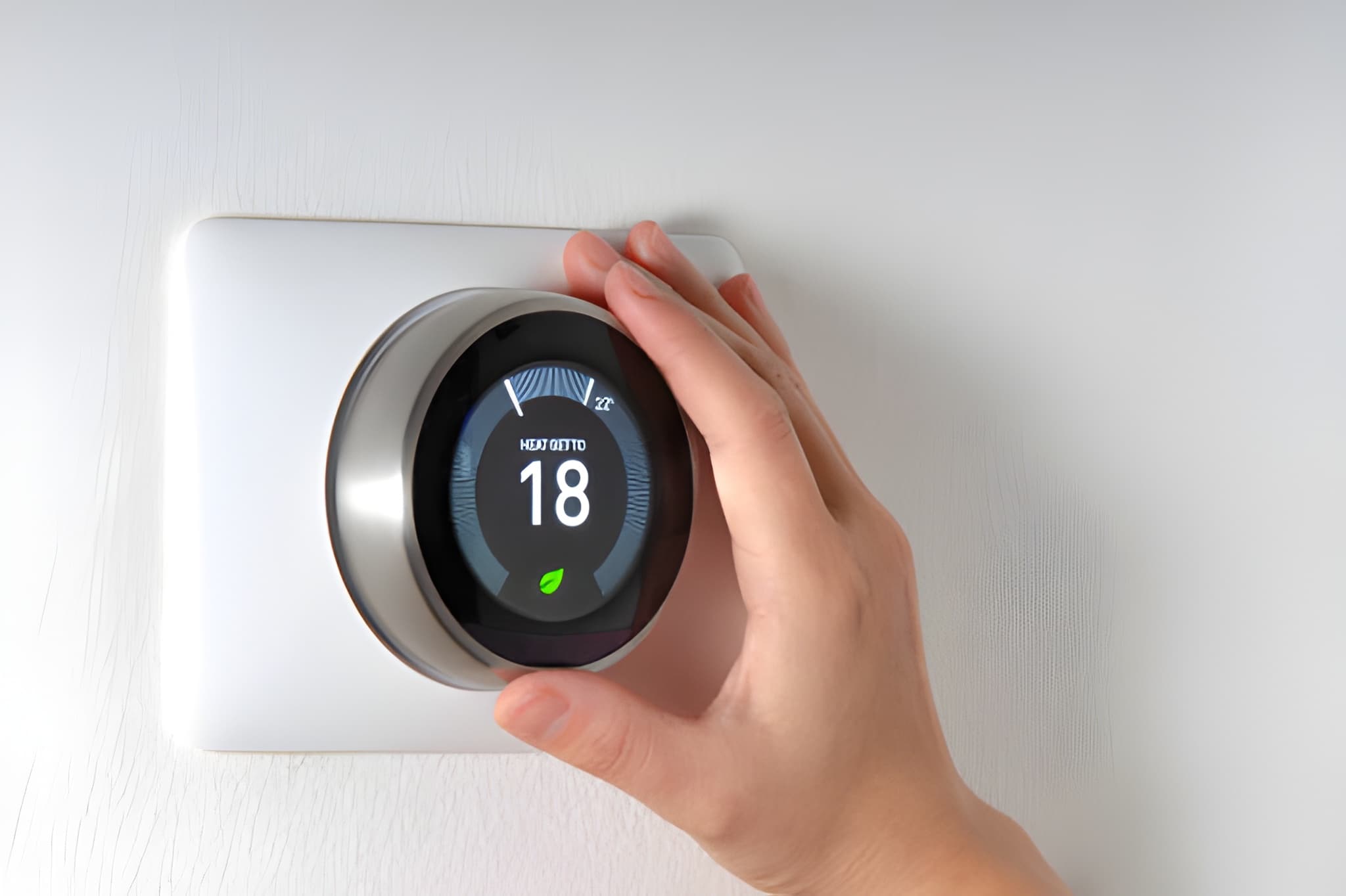
At Stinson Mechanical, we've spent over 25 years helping families in the Willamette Valley stay comfortable and save money with energy-efficient HVAC solutions. A programmable thermostat is one of the simplest and most effective upgrades we recommend, and we're here to explain how it works, what benefits you'll see, and how our team can help you install and set up the perfect system for your home.
Why a Programmable Thermostat Matters in Gates, OR
Gates and the surrounding Willamette Valley experience distinct seasonal changes. Winter temperatures can dip well below freezing, and spring through fall brings variable weather that keeps your heating and cooling system working overtime if you're not strategic about it. Many homeowners we work with discover they're running their systems constantly, keeping their homes at a comfortable temperature 24/7 even when nobody's home or when everyone's sleeping.
A programmable thermostat solves this problem by letting you automatically adjust your temperature settings based on your schedule. Instead of manually changing your thermostat several times a day - or worse, leaving it at one temperature all the time - you can program it to heat or cool only when needed. This flexibility is what makes the difference between an energy bill that drains your wallet and one that stays reasonable.
The reality is this: every degree of temperature change can impact your energy usage. When you're asleep or away from home, you don't need your heating or cooling running at full comfort settings. A programmable thermostat handles this automatically, reducing wasted energy and lowering your monthly costs. Homeowners in Gates typically see noticeable savings within the first few months of using a properly programmed system.
Understanding Programmable Thermostats vs. Smart Thermostats
You've probably heard the terms "programmable thermostat" and "smart thermostat" used interchangeably, but there are some important differences worth understanding.
Programmable thermostats are the more traditional option. They allow you to set temperature schedules in advance - typically offering separate settings for weekdays and weekends, with options for morning, afternoon, evening, and nighttime temperatures. Once you program your schedule, the thermostat follows it automatically every week. These systems are straightforward, reliable, and don't require internet connectivity or smartphone apps.
Smart thermostats are newer technology that offers significantly more flexibility and learning capabilities. They connect to your home's Wi-Fi network, allowing you to adjust your temperature from anywhere using a smartphone app. Many smart thermostats learn your habits over time and can adjust automatically based on your patterns, weather forecasts, and even whether they detect people at home. Some models integrate with other smart home devices for even more control and automation.
Both options will reduce your energy bills compared to a manual thermostat that you adjust by hand. The choice between them depends on your preferences, your home's setup, and your budget. Some families in Gates prefer the simplicity and reliability of a traditional programmable thermostat, while others appreciate the remote access and learning features of a smart model. At Stinson Mechanical, we work with both types and can help you determine which is right for your situation.
A programmable thermostat with basic scheduling can save you 10 to 15 percent on heating and cooling costs annually. A smart thermostat with learning capabilities can sometimes save even more, but the key benefit is that you're no longer wasting energy on heating or cooling an empty house or sleeping bedrooms.
Benefits of Installing a Programmable Thermostat
Beyond lower energy bills, there are several solid reasons to upgrade to a programmable thermostat if you don't already have one.
Consistent comfort - Your home maintains the temperature you prefer during the times when people are actually there to enjoy it. No more coming home to a freezing house in winter or an oven-like space in summer because you forgot to adjust the thermostat before leaving.
Better sleep - Programmable thermostats allow you to set a slightly lower temperature for nighttime, which many people find helps them sleep better. Lower nighttime temperatures also save energy while you're resting.
Reduced strain on your system - By cycling your heating and cooling appropriately throughout the day, you reduce unnecessary wear on your furnace, heat pump, or air conditioner. This can extend the lifespan of your equipment and reduce the likelihood of unexpected breakdowns.
Enhanced energy efficiency - This is especially important in the Willamette Valley, where heating needs are significant during winter months. A programmable thermostat ensures your heating system isn't running when you don't need it, which adds up to real savings over time.
Flexibility and control - If your routine changes occasionally, you can adjust your schedule, or you can manually override the thermostat for a specific day without disrupting your regular programming.
Environmental benefits - Using less energy to heat and cool your home reduces your carbon footprint. If environmental responsibility matters to you, this is another positive reason to make the switch.
Common Issues Addressed by Programmable Thermostat Upgrades
We frequently talk with homeowners in Gates who mention specific comfort or efficiency issues that a programmable thermostat can improve.
- High energy bills from running your system continuously at the same settings
- Inconsistent temperatures throughout your home, where some rooms feel too cold or too warm
- Forgetting to adjust your thermostat, resulting in wasted heating or cooling when you're away
- Difficulty finding a temperature setting that works for everyone in the household at the same time
- Older thermostats that are unreliable or difficult to adjust
- Systems that run constantly without actually reaching the desired temperature (often a sign of an aging thermostat or a mismatch between the thermostat and your HVAC equipment)
A programmable thermostat won't solve every comfort problem - sometimes those temperature inconsistencies point to issues with your ductwork, insulation, or the HVAC system itself - but it's often a critical piece of the solution. When Stinson Mechanical performs an energy efficiency assessment at your home, we evaluate whether your thermostat is contributing to any comfort or efficiency issues.
Installation and Professional Programming
While programmable thermostats are available at hardware stores and big box retailers, there are real advantages to having a professional install and program your system, especially if you want it integrated seamlessly with your existing HVAC equipment.
Professional installation ensures compatibility - Not every thermostat works perfectly with every furnace, heat pump, or air conditioning system. Our team at Stinson Mechanical knows the equipment we work with and can confirm that the thermostat you choose is fully compatible with your specific system. This prevents frustrating issues like features that don't work properly or equipment that doesn't respond as expected.
Proper wiring and setup - Thermostats connect to your HVAC system through wiring in your walls. Professional installation guarantees these connections are correct and secure, which is essential for safe operation and accurate temperature readings.
Custom programming for your lifestyle - This is where professional setup really shines. Instead of trying to figure out the programming yourself using a confusing manual, our technicians talk with you about your actual daily routine and set up schedules that match how you really live. We factor in your work schedule, when family members are home, seasonal adjustments needed in the Willamette Valley, and any special comfort preferences.
Integration with your existing system - If you have other HVAC equipment or upgrades, we ensure your new thermostat works smoothly with everything else. For example, if you have a ductless heat pump system or a multi-zone heating setup, we program accordingly to maximize efficiency across your entire system.
Our typical installation for a programmable thermostat takes just a couple of hours, and most routine installations can be completed in one visit. We handle all the technical work so you don't have to worry about it. After installation, we walk you through how to use your new thermostat, explaining the features and how to make adjustments if you need to.
Recommended Temperature Schedules for Gates, OR
The ideal thermostat schedule depends on your specific situation, but here are general guidelines that work well for most families in Gates and the Willamette Valley.
Winter heating schedule - With cold winters in our area, most families find these settings work well:
- Daytime (occupied): 70-72 degrees Fahrenheit
- Early morning before waking: 68-70 degrees (warming the house for comfort when you get up)
- Nighttime (sleeping): 66-68 degrees (cooler for better sleep, reduces heating load)
- When away from home during the day: 62-65 degrees (significantly reduces heating without risking frozen pipes or major discomfort if you return unexpectedly)
Summer cooling schedule - During warmer months, efficient settings typically look like:
- Daytime when home and active: 74-76 degrees (comfortable without excessive cooling)
- Early evening and nighttime: 72-74 degrees (cooler for sleeping)
- When away from home: 78-80 degrees (reduced cooling saves energy, and you're not there to feel uncomfortable)
Transition seasons - Spring and fall in the Willamette Valley can be tricky because days might be warm and evenings cool. Many programmable thermostats allow you to adjust your schedule seasonally, so you're not running your heating in late spring or cooling in early fall unnecessarily.
These are starting points. Every home is different, and personal comfort preferences vary. Some families prefer warmer settings, while others like it cooler. The key is setting schedules that balance comfort with efficiency. You can always adjust your programming if you find the settings aren't quite right for your household.
One practical tip: if you're unsure about optimal settings, start with these baseline recommendations and then fine-tune based on a few weeks of experience. Notice which settings feel comfortable and check your energy bills to see where you're seeing the most savings. This real-world feedback helps you dial in the perfect schedule.
Integration with Your Existing HVAC System
One concern homeowners often have is whether a programmable thermostat will work properly with their current furnace, air conditioner, heat pump, or ductless system. The answer is almost always yes, but the specifics depend on what equipment you have.
Furnace and air conditioner systems - These are the most straightforward installations. A programmable thermostat controls when your furnace fires up for heating and when your AC unit kicks in for cooling. It's been done for decades and works reliably.
Heat pump systems - If you have a heat pump - which operates efficiently in the Willamette Valley because it can provide both heating and cooling - a programmable thermostat works excellently. In fact, heat pumps respond particularly well to temperature scheduling because they're most efficient when they can run steadily at appropriate setpoints rather than ramping up and down trying to maintain one constant temperature.
Ductless heat pump systems - Ductless systems, also called mini-splits, are increasingly popular in our area because of their flexibility and efficiency. Programmable thermostats integrate well with ductless systems and help you maximize their energy-saving potential.
Multi-zone systems - If your home has multiple HVAC zones - perhaps one thermostat for upstairs and another for downstairs - we can integrate programmable thermostats for each zone, allowing independent scheduling that matches how different parts of your home are used.
During an initial consultation, we evaluate your current system and recommend thermostats that are fully compatible with your equipment. We also make sure your ductwork and system balance are optimized so the thermostat can do its job effectively. Sometimes we discover that a system isn't performing well because of ductwork issues or improper balance between rooms - things a thermostat upgrade alone won't fix. When that happens, we discuss comprehensive solutions.
Understanding Your Thermostat Display and Controls
Once your programmable thermostat is installed, you'll want to understand what you're looking at and how to use it. Most programmable thermostats display similar information, though the exact layout varies by model.
Temperature display - This shows your home's current temperature and the temperature you've set as your target. If there's a difference, your heating or cooling system is working to reach the setpoint.
Mode selector - This lets you choose between heating, cooling, or automatic mode. Automatic mode switches between heating and cooling as needed based on the temperature. During transitional seasons in Gates, you might switch to automatic mode rather than manually changing between heating and cooling.
Fan setting - You can usually choose between "auto" (where the fan runs only when heating or cooling is needed) and "on" (where the fan runs continuously). Auto mode is more energy efficient in most cases.
Schedule display - Your thermostat will show you the programmed schedule, allowing you to see what temperatures are set for different times of day and days of the week.
Override or hold functions - If you want to temporarily change the temperature without reprogramming the entire schedule, you can manually adjust it. The thermostat will return to the programmed schedule at the next scheduled time.
After we install your thermostat, we spend time walking you through these features so you feel comfortable using it. If you have questions later, we're happy to help over the phone.
User Training and Troubleshooting
We find that most homeowners successfully use their programmable thermostats without issues, but it's helpful to know what to do if something seems off.
System isn't heating or cooling - First, confirm the thermostat mode is set correctly (heat for winter, cool for summer, or auto if appropriate). Check that the setpoint temperature is actually different from the current temperature - your system won't run if the current temperature matches your setpoint. Verify your HVAC equipment is receiving power. If you still have no response, contact us.
Temperature readings seem inaccurate - Make sure the thermostat isn't in direct sunlight, near heat sources like registers, or in extreme drafts, as these can give false readings. Allow 15 minutes for the thermostat to stabilize if you've just adjusted it significantly. If readings consistently seem wrong, we can evaluate whether the thermostat sensor needs recalibration or replacement.
Programming changes aren't sticking - Double-check that you've completed the programming steps correctly and that the schedule actually saved. Refer to your manual or watch online tutorials for your specific model. If it continues not to save, the thermostat may have a technical issue requiring replacement.
Some rooms are more comfortable than others - A thermostat upgrade alone may not solve zone temperature imbalances. This often indicates issues with ductwork, dampers, or how your system is balanced. We can assess whether this is a thermostat issue or a broader system problem.
High energy bills haven't decreased as expected - This sometimes means your programmed schedule isn't as aggressive as it could be, or it might indicate underlying issues with your HVAC equipment or home insulation. We can review your setup and identify opportunities for improvement.
If you encounter any issues with your programmable thermostat after installation, contact Stinson Mechanical and describe what's happening. Depending on the situation, we can often troubleshoot over the phone, or we can schedule a technician visit. Our goal is to get your system running smoothly so you're actually benefiting from the upgrade.
Financing Options for Your Thermostat Upgrade
Upgrading to a programmable thermostat is an investment that pays for itself through energy savings, but we understand that homeowners sometimes want to spread the cost over time. Stinson Mechanical offers flexible financing options through Synchrony, making it easy to upgrade your thermostat without a large upfront expense.
With financing, you can install your new programmable thermostat now and start enjoying lower energy bills while making manageable monthly payments. This approach often makes financial sense because your monthly energy savings can offset or even exceed your financing payment, meaning the upgrade essentially pays for itself while improving your comfort.
We can discuss financing options during your consultation, and our team will explain what programs are available for your situation. The goal is to remove cost as a barrier to upgrading to technology that benefits your home and wallet.
Why Choose Stinson Mechanical for Your Programmable Thermostat Installation
With over 25 years of HVAC experience serving the Willamette Valley and Gates, Stinson Mechanical brings expertise and local knowledge to every thermostat installation. Here's what sets us apart:
- Honest recommendations - We don't push expensive smart thermostats if a traditional programmable model is the right fit for your needs. We discuss your options and help you choose what's best for your situation and budget.
- Local knowledge - We understand the specific heating and cooling challenges in Gates and the Willamette Valley. Our recommendations account for local weather patterns and seasonal variations.
- Proper installation and setup - We don't just swap out equipment and leave. We ensure compatibility with your system, program your schedule based on your actual lifestyle, and train you thoroughly on how to use your new thermostat.
- Stocked parts and equipment - When you need a thermostat upgrade, we have quality options in stock. No long waits or delays getting your system installed.
- Follow-up support - After installation, we're here if you have questions or need adjustments to your programming. Our commitment to keeping you comfortable doesn't end when the technician leaves.
A programmable thermostat is one of the smartest upgrades you can make to stay comfortable and save money with your HVAC system. Whether you're looking to reduce your energy bills, upgrade aging equipment, or gain better control over your home's temperature, Stinson Mechanical is ready to help.