.svg)
.svg)

Your home's thermostat is one of the most important components of your heating and cooling system. When it stops working properly, you'll notice it right away - whether that's a blank display on a cold morning, rooms that won't heat evenly, or your AC running at the wrong times. A faulty thermostat doesn't just create discomfort; it can also waste energy and drive up your utility bills. If you're experiencing thermostat problems in Dallas, OR, Stinson Mechanical is here to diagnose and fix the issue quickly so you can get back to feeling comfortable in your home.
With over 25 years of HVAC experience serving the Willamette Valley, our team understands the unique climate challenges that Dallas and surrounding areas face. From cold winters requiring reliable heating to warm summers demanding efficient cooling, your thermostat plays a critical role in maintaining consistent temperatures throughout the year. We've seen every type of thermostat problem, and we know how to get your system working again - honestly and efficiently.
Common Thermostat Problems We Repair
Thermostats can fail in several different ways. Understanding what's happening with yours is the first step toward a solution.
- Blank display or no power - If your thermostat screen is dark or won't turn on, there's likely a power issue. This could be a dead battery (if it's battery-powered), a blown fuse, or a tripped circuit breaker. Sometimes the problem is as simple as replacing batteries; other times, it requires checking your home's electrical connections.
- Incorrect temperature readings - A thermostat that displays the wrong temperature will cause your heating or cooling system to run at the wrong times. This can happen when the internal temperature sensor fails or becomes dirty. Your system might run constantly trying to reach a temperature that's actually already been reached, wasting energy in the process.
- Loss of wireless connectivity - Modern smart thermostats and connected systems rely on stable WiFi or wireless signals. If your thermostat has lost connection to your home network or your HVAC equipment, it can't communicate properly. This leaves you unable to control your system remotely and may prevent your heating or cooling from responding to your settings.
- System won't turn on or off - A thermostat that won't activate your furnace or air conditioner, or one that won't stop running, points to control board issues or wiring problems. This is one of the most frustrating failures because your system becomes unpredictable.
- Inconsistent temperature control - If some rooms feel too hot while others are too cold, or if your system cycles on and off too frequently, your thermostat may not be reading the temperature accurately or may have a faulty control board.
- Physical damage or corrosion - Dust, moisture, or physical damage inside the thermostat can prevent its internal components from working. This is especially common in older units or in homes with high humidity.
How We Diagnose Your Thermostat Problem
When you call Stinson Mechanical for thermostat repair in Dallas, OR, our technicians start with a thorough diagnostic. We don't guess at what's wrong - we test your system systematically to pinpoint the exact issue.
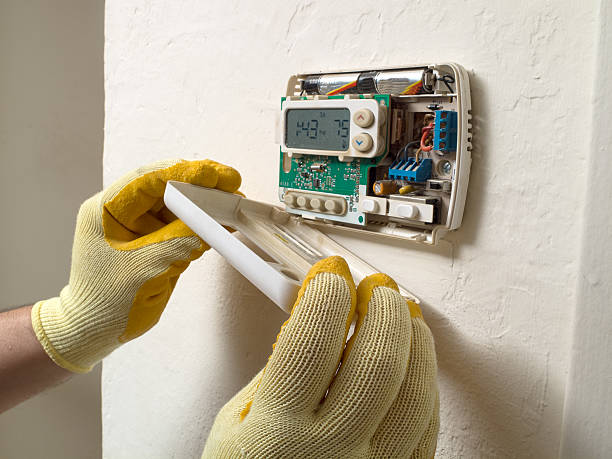
First, we check whether your thermostat is receiving power. If it's battery-powered, we replace the batteries and test again. If it's wired, we verify that the circuit breaker hasn't tripped and that power is reaching the device.
Next, we examine the temperature sensor inside the thermostat. We compare the thermostat's reading to the actual room temperature using our own diagnostic tools. If there's a significant difference, the sensor likely needs replacement.
We also test the control board - the electronic "brain" of your thermostat. This board sends signals to your furnace or air conditioner telling them when to run. If it's malfunctioning, your entire system becomes unreliable. For smart thermostats, we verify WiFi connectivity and check for any software updates that might resolve the issue.
Finally, we inspect all wiring connections between the thermostat and your HVAC equipment. Loose wires, corroded connections, or damaged insulation can prevent proper communication between components.
Sensor and Control Board Repair or Replacement
Many thermostat problems can be solved by repairing or replacing internal components.
Sensor replacement is one of the most common fixes. The temperature sensor sits inside your thermostat and measures the air around it. Over time, these sensors can drift out of calibration or fail completely. Replacing a faulty sensor is often more cost-effective than replacing the entire thermostat, especially if your unit is otherwise functioning well. A new sensor ensures accurate temperature readings and helps your system run efficiently.
Control board repair or replacement addresses the electronic components that manage your heating and cooling. If your thermostat won't turn your system on or off, or if it's cycling erratically, a faulty control board is often the culprit. We can sometimes repair minor control board issues by cleaning contacts or resoldering loose connections. However, if the board is damaged beyond repair, we'll replace it with a compatible unit that matches your thermostat model and your HVAC equipment.
Battery replacement is simple but essential for battery-powered thermostats. We use high-quality batteries and ensure they're installed correctly. A fresh battery can often restore full functionality to a thermostat that seemed completely dead.
When we recommend replacement of a major component, we always explain why and discuss your options with you. That's part of our commitment to honesty - we want you to understand what's happening with your system and why we're recommending the repair we suggest.
Wiring and Compatibility Checks
Your thermostat doesn't work alone. It must communicate with your furnace, air conditioner, or heat pump through a series of wires and electronic signals. If those wires are damaged or if the thermostat isn't compatible with your equipment, you'll have problems.
During our diagnostic, we check every wire connection between your thermostat and your HVAC system. We look for loose connections, corroded terminals, frayed insulation, or wires that have been damaged by age, pests, or weather. Tightening a loose connection or replacing damaged wire can often solve the problem completely.
Compatibility is another critical factor. If you've recently replaced your furnace or air conditioner, your old thermostat might not be fully compatible with the new equipment. Some systems use different wiring configurations or control voltages. Our technicians know the heating and cooling equipment commonly used in the Dallas and Willamette Valley area, and we can verify that your thermostat and HVAC system are working together properly.
For smart thermostats, we also verify that your system is compatible with the connected features. Some older furnaces or heat pumps don't support remote access or scheduling features. We'll let you know what functionality your specific system can support.
The Thermostat Repair Process and Timeline
Here's what you can expect when you choose Stinson Mechanical for thermostat repair in Dallas, OR.
Step 1 - Schedule and arrive - Call us at 503-689-4021 or request a free quote online. We work Monday through Friday, 9:00 am to 5:00 pm. We'll arrange a convenient time to visit your home and diagnose the problem.
Step 2 - Diagnostic assessment - When our technician arrives, we'll spend time understanding what you've noticed about your thermostat's behavior. Is the display blank? Are temperature readings wrong? Is your system running constantly? These details help us narrow down the problem. We'll then perform our systematic diagnostic tests to identify the exact issue.
Step 3 - Explain the problem and options - Once we've diagnosed the problem, we'll explain what's wrong in straightforward language. We'll tell you what needs to be fixed and present your repair options. If the thermostat can be repaired affordably, we'll explain that option. If replacement makes more sense, we'll discuss that too. We won't pressure you into an unnecessary replacement - that's our commitment to honest service.
Step 4 - Complete the repair - Most thermostat repairs take 1-2 hours from start to finish. If the problem is a simple sensor replacement, battery change, or loose wiring, we'll likely complete it during that same visit. For more complex repairs or if parts need to be ordered, we'll let you know the timeline upfront.
Step 5 - Test and verify - Before we consider the job done, we test your thermostat thoroughly. We verify that it's reading temperature accurately, that it communicates with your furnace or air conditioner, and that your system responds correctly to temperature adjustments. You'll see it working properly before we leave.
For routine repairs with parts on hand, most Dallas, OR customers are back to normal comfort the same day they call us. Our priority is getting you comfortable efficiently - and that means fixing problems fast.
Understanding Diagnostic Fees and Repair Costs
We charge a diagnostic fee to thoroughly test your thermostat and HVAC system. This fee covers the time our experienced technician spends identifying the exact problem. A thorough diagnostic typically takes 45 minutes to an hour, and it gives you clear information about what's wrong and what your repair options are.
The good news is that if you decide to move forward with a repair through Stinson Mechanical, we credit the diagnostic fee toward your repair cost. So you're not paying twice - you're paying once for the service you choose.
The actual cost of your repair depends on what's wrong. A battery replacement or loose wiring fix costs far less than a control board replacement or a new thermostat installation. That's why a proper diagnosis matters - it ensures you're only paying for the repair your system actually needs, not for unnecessary work.
We offer flexible financing through Synchrony for larger repairs or replacements, making it easier to get your system working again without breaking your budget. Ask our team about financing options when you call for your free estimate.
Preventing Future Thermostat Problems
Once we've repaired your thermostat, you'll want to keep it working well. Here are practical steps to prevent common problems.
Keep it clean and dust-free - Dust and debris can accumulate inside your thermostat over time, interfering with sensors and contacts. If your thermostat is in a dusty area of your home, have it professionally cleaned during your spring or fall maintenance visit. At minimum, gently wipe the outside of the unit occasionally.
Maintain stable humidity - Excess moisture or extremely dry air can damage thermostat components. If you have humidity issues in your home, addressing them benefits your entire HVAC system, not just your thermostat. Proper heating and cooling maintenance helps regulate home humidity naturally.
Protect it from physical damage - Avoid bumping your thermostat or letting it get wet. If you have children or pets, position your thermostat where it won't be disturbed. Protect it from direct sunlight, which can cause false temperature readings.
Have your HVAC system serviced twice yearly - This is one of the most important things you can do. We recommend a spring tune-up before your air conditioner season and a fall tune-up before heating season. During these visits, we inspect and test your thermostat as part of the complete system check. Catching thermostat issues early prevents larger problems later.
Update software for smart thermostats - If you have a connected thermostat, keep its software current. Manufacturers release updates that improve performance and fix bugs. Check your thermostat's settings or app regularly to ensure updates are installed.
Replace batteries proactively - If your thermostat is battery-powered, replace the batteries once a year, even if they still seem to work. Weak batteries can cause intermittent problems before they die completely.
Why Choose Stinson Mechanical for Your Thermostat Repair
Stinson Mechanical has served the Willamette Valley, including Dallas, OR, with honest HVAC service for over 25 years. Our priorities are simple: honesty, keeping you comfortable in an efficient manner, and making sure we have the equipment and parts needed to get the job done right.
When you call us for thermostat repair, you're getting experienced technicians who understand the heating and cooling challenges specific to our region. We know how critical reliable comfort is during our cold winters and warm summers. We also know that you deserve straightforward answers about what's wrong with your system and what it will cost to fix it.
We maintain sufficient stock of common thermostat components and parts so we can often complete repairs the same day. We don't make you wait for parts or multiple visits if we can avoid it. And because we work with various HVAC systems and equipment types throughout the valley, we can handle compatibility issues and ensure your thermostat works properly with your specific furnace or air conditioner.
If you're experiencing thermostat problems in Dallas, OR, call Stinson Mechanical at 503-689-4021 to schedule your diagnostic. You'll get honest service, clear explanations, and efficient repairs from a team that's been keeping the Willamette Valley comfortable for over two decades.